Mastering studio lighting is an ever-evolving and rewarding journey filled with an array of modifiers, each capable of crafting a unique range of lighting effects, from a gentle glow to a sharp radiance. However, few can match the exceptional quality and versatility of the parabolic reflector. Favoured by fashion, beauty, and portrait photographers, these modifiers have recently surged in popularity, and obviously, it’s for a good reason!
But what exactly is parabolic lighting, and why do these modifiers stand out from the crowd? We’ve teamed up with Godox for this insightful article, diving into the remarkable features of parabolic reflectors – find out what makes them such a priceless investment for anyone looking to shine in professional photography!
Quick View
Introducing The Parabolic Perfection
Parabolic reflectors have earned a reputation as one of the most adaptable light modifiers in the photography industry. Their high-quality light output, however, often comes with a hefty price tag, making them a less common choice among photographers. Traditionally, these reflectors were primarily used by high-end professionals due to their cost. Fortunately, the landscape is shifting, with several brands now developing affordable parabolic reflectors that don’t compromise on light quality. An example of this trend is the Godox Parabolic Light Focusing System, which brings this once exclusive technology within the reach of many.
Why Use a Parabolic Reflector?
Parabolic light modifiers are a cut above the rest, redefining visual storytelling with their exceptional lighting capabilities. Specifically crafted to produce a variety of high-quality lighting settings and offer a unique light shaping method, their intricate design yields a natural and unparalleled illumination effect that outshines other modifier types. Striking the right balance between softness and contrast, these reflectors cast beautifully sculpting light and shadows, adding an elegant depth and enhancing overall visual appeal of your work.
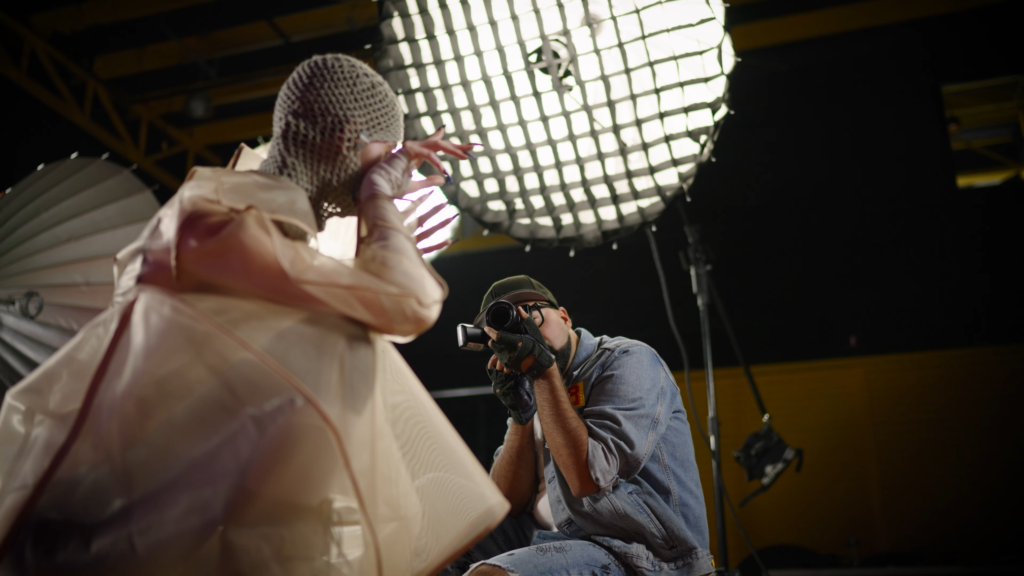
How Does a Parabolic Reflector Work?
We won’t be deep-diving into the complexities of maths and physics surrounding these modifiers – instead, let’s keep it simple and straightforward. A true parabolic reflector comes with an adjustable focusing rod that allows you to position and move your light source inside it. The light’s placement in relation to the curve of the softbox plays a key role in how the light rays are reflected, which, in turn, affects the quality of light output.
When the light is mounted most inward, it creates a highly focused beam with strong contrast. At the focal point, the light rays are output as parallel, striking a splendid balance between intensity and smoothness. On the other hand, when the light is moved further out towards the edge, the reflected rays diffuse, creating a softer light with less contrast as some rays hit the subject, while others spread out.
Parabolic Reflectors vs. Softboxes – What’s The Difference?
At first glance, it may seem like a parabolic reflector is just an overly complex version of an umbrella or a softbox. However, several distinct features set it apart, making it truly unique compared to these other modifiers. The key differentiator lies in the narrow-angled, true parabolic shape and the focusing rod, which both allow for precise light control.
Unlike a softbox, which creates a softer, more evenly spread light source, a parabolic reflector harnesses the power of its precisely engineered construction to either focus light into a sharp, controlled beam, or fine-tune it for an alluring, dispersed glow. This exceptional trait allows it to produce a crisp, directional, and highly controllable lighting. It’s the perfect tool for creating dramatic highlights and deep shadows, offering photographers a significantly different approach to illuminate their subjects.
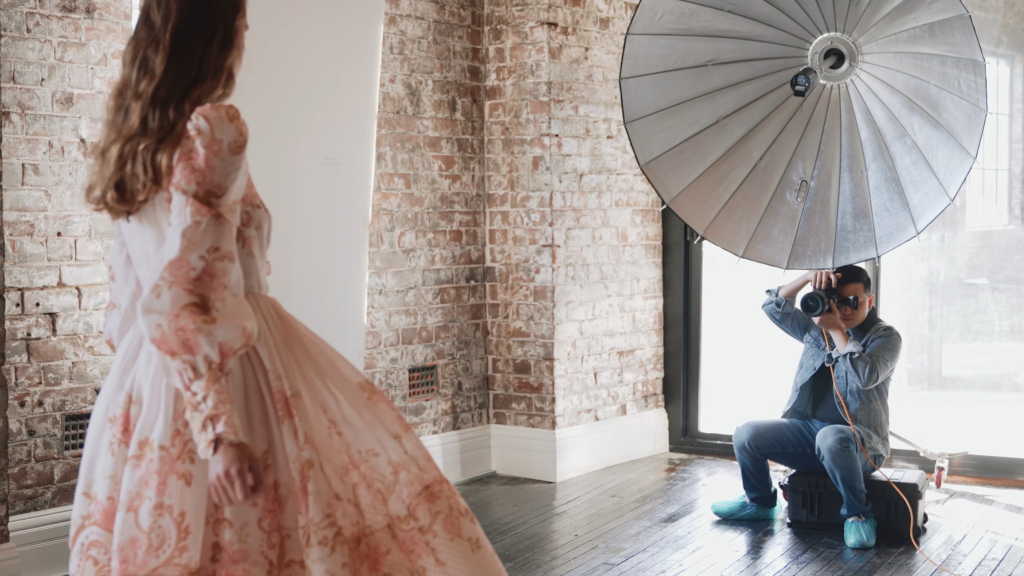
Exploring the Godox Parabolic Light Focusing System
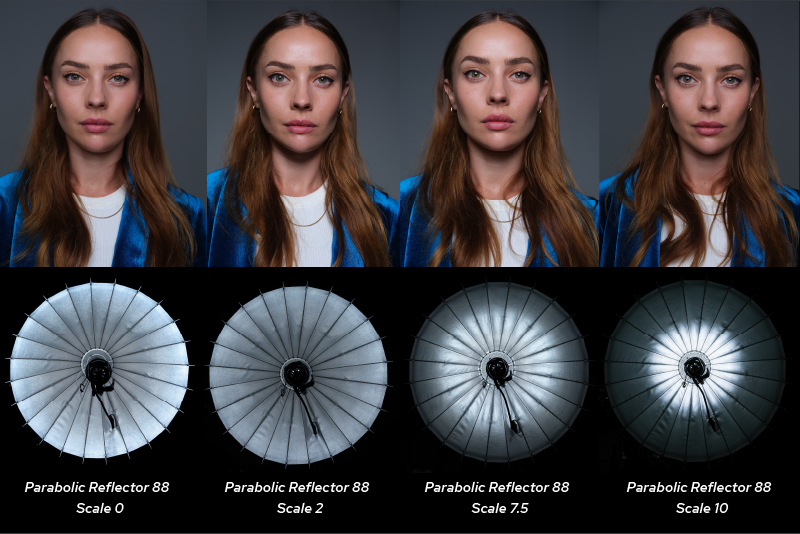
Simply describing the effects of parabolic reflectors falls short of doing them justice. To truly grasp their power, we must dive into specific examples of studio portraits by the talented photographer Aries Tao. In a bid to understand the true capabilities of these modifiers, we will examine the lighting tests with the P88 and P158. By focusing and spreading the light differently, Tao achieves varied effects in his portraits and provides an exciting glimpse into the variability of light performance these modifiers can offer!
A Close Look At The Para 88 Reflector
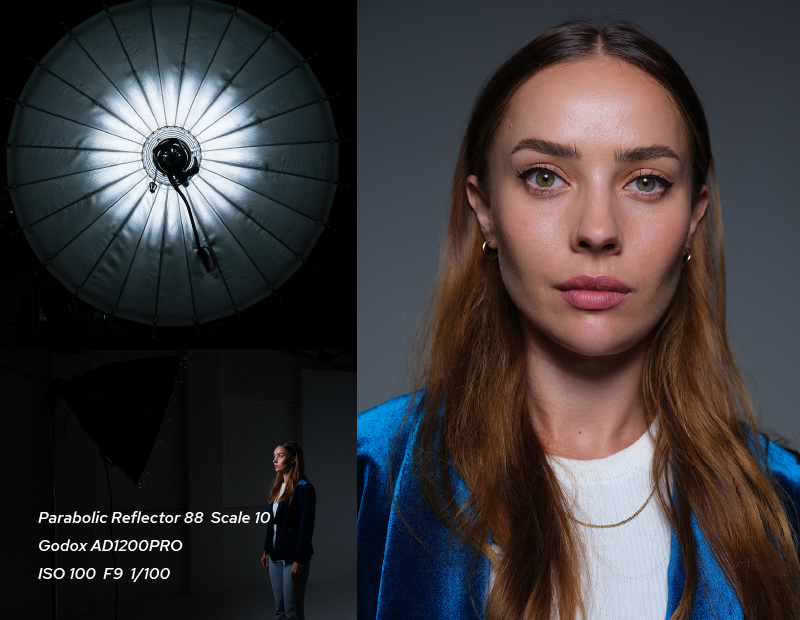
In the initial testing setup, the Para 88 reflector was placed 80 cm away from the model’s forehead. The focus point (10th notch on the zooming rod) uses the reflector’s parabolic design to bounce the unidirectional light, converting it into a consistent, parallel beam. This beam is then refined into a well-defined, intense ray of light. The outcome is a strong directional light that produces a striking contrast on the model’s face.
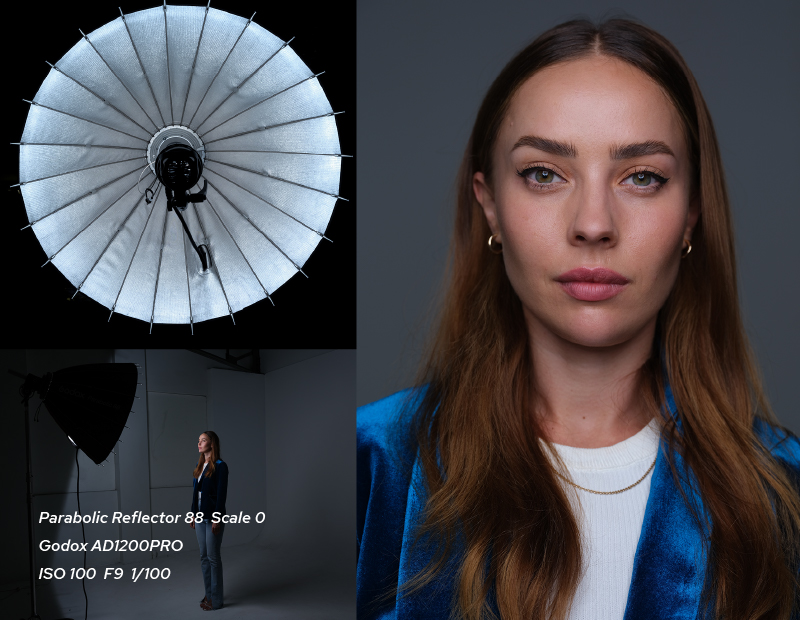
When the focusing rod is set to the 0 step position, or the flood setting, most of the light is bounced off the reflector’s rim, while the center reflects significantly less light, creating an effect similar to a large ring light. This setup envelopes the model’s face with captivating light, giving her a unique, three-dimensional look that perfectly highlights her features.
Exploring the Para 158 Reflector Setup
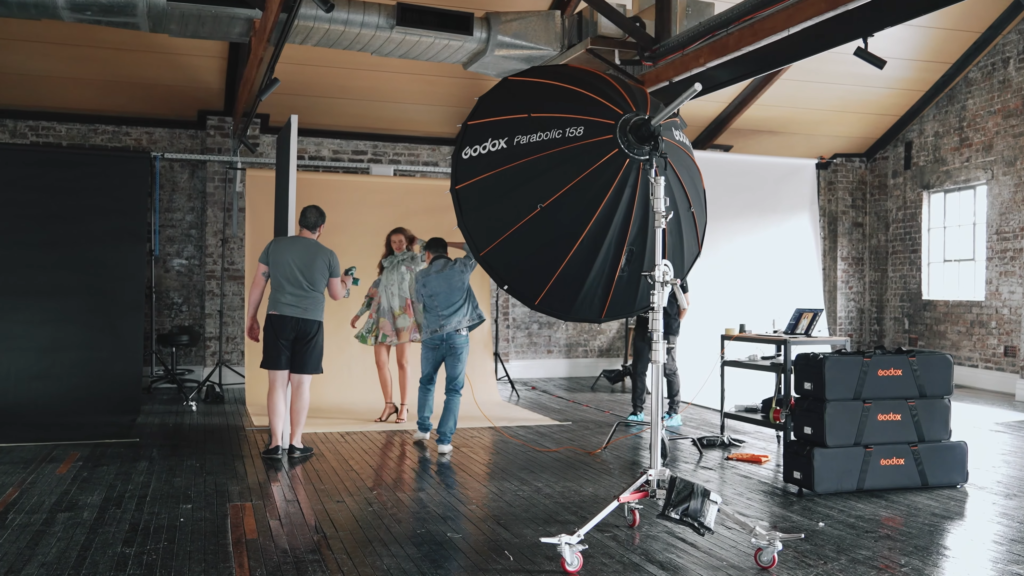
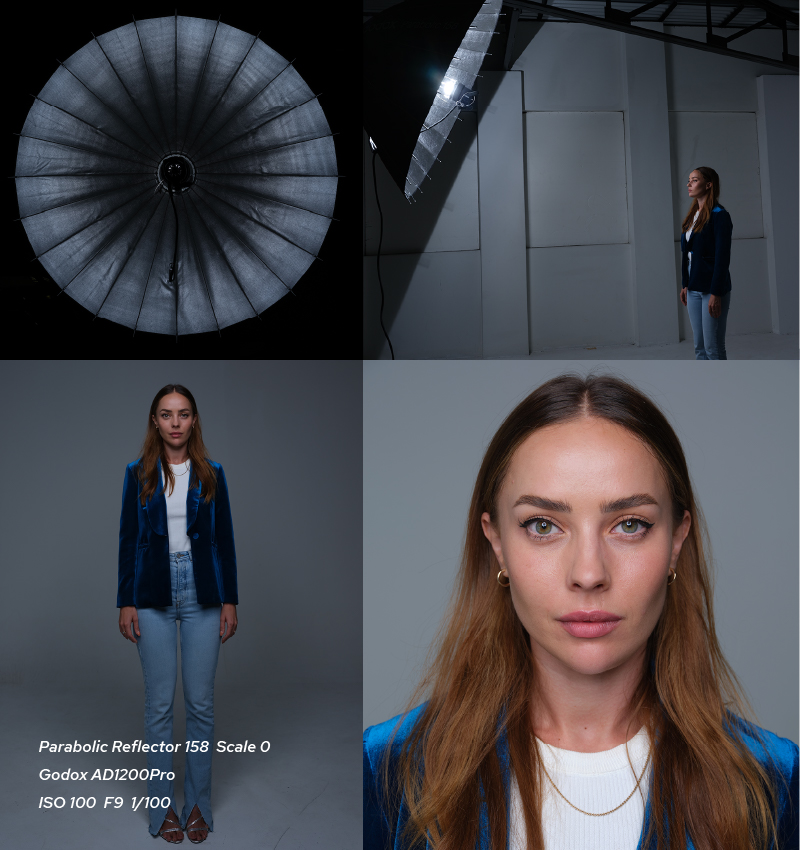
In the second setup, Tao placed the Para 158 reflector 1.5 meters away from the model’s forehead, and set it to the flood position once more. This way it could provide the same wrap-around lighting effect, even when capturing full-body shots of the model. Since it’s a considerably larger light source, you can also stand in front of it without affecting the light significantly – this way only 2-3 out of the 24 braces are partially blocked, letting you maintain a consistent level of illumination.
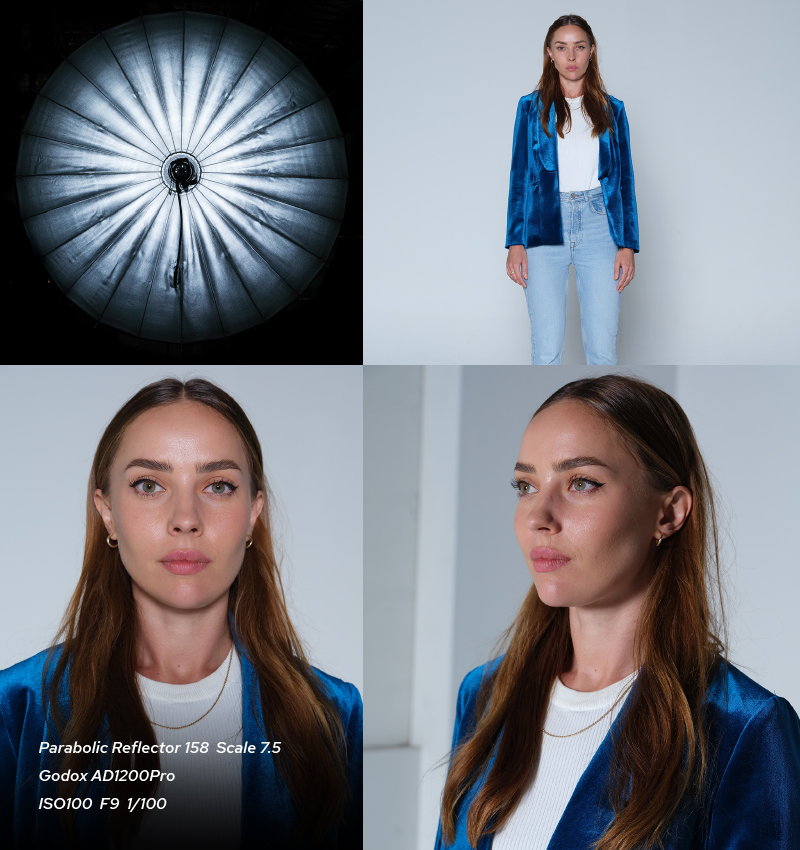
The zoomed-in rod position can also be used to illuminate a full body portrait from an even greater distance. For the third setup, Tao moved the Para 158 reflector back even further to 6.7 meters distance from the model, ensuring her entire body was lit up in consistent, parallel light rays head to toes. This setup is particularly effective while capturing dynamic movement shots. Moreover, the strong, directional light will also impeccably bring out the textures of any attire modeled in your shots.
Expand Your Options Further With Accessories
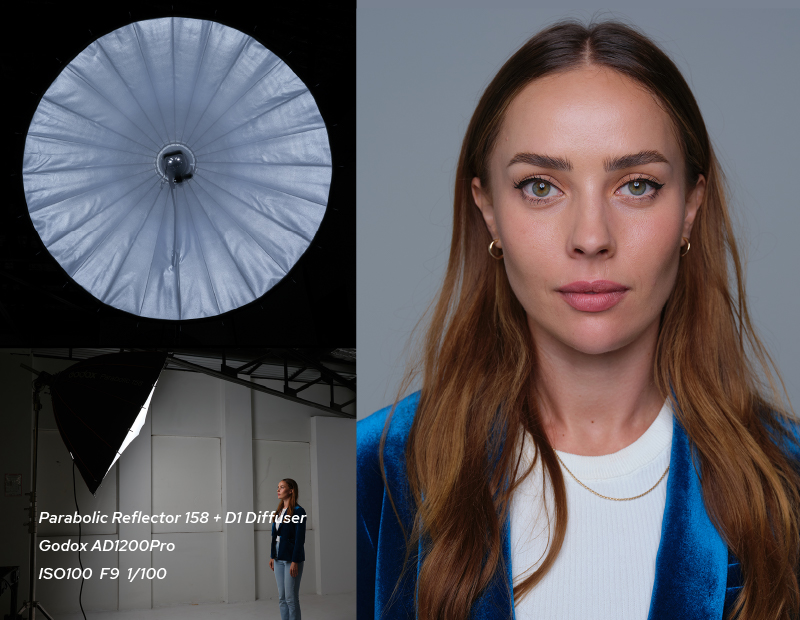
Although the parabolic reflector offers versatile lighting control with its zoom feature, achieving a subtler, more diffused look may require additional accessories. For those looking to adjust the light to their specific needs, Godox offers a range of options, including two different diffusers, ensuring you have the tools to create the perfect lighting on your photos and achieve your desired visual outcome.
The D1 diffuser reduces the light output by half a stop, effectively minimizing harsh shadow lines and ensuring a softer illumination.
The D2 diffuser is designed to absorb a full stop of light, further diffusing the intensity and providing even gentler light fall.
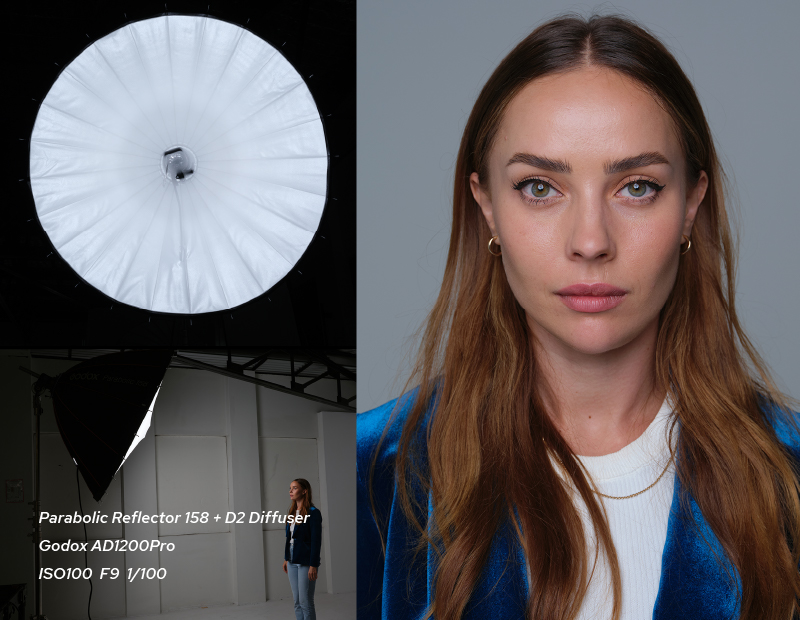
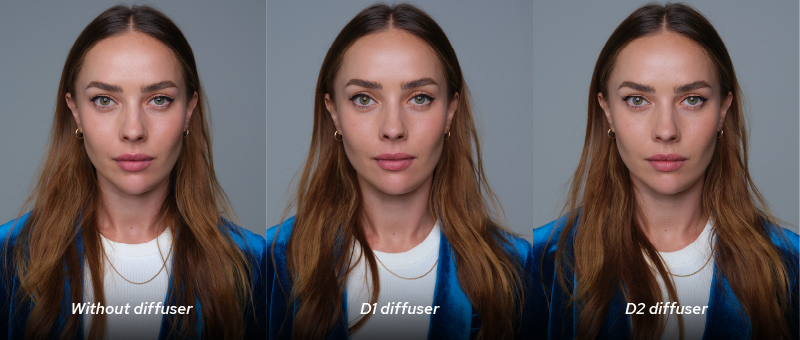
To provide more control over the light’s direction and spread, Godox also offers a grid which allows you to shape and control the light, ensuring that it falls exactly where you want it, adding even more versatility to your lighting setup.
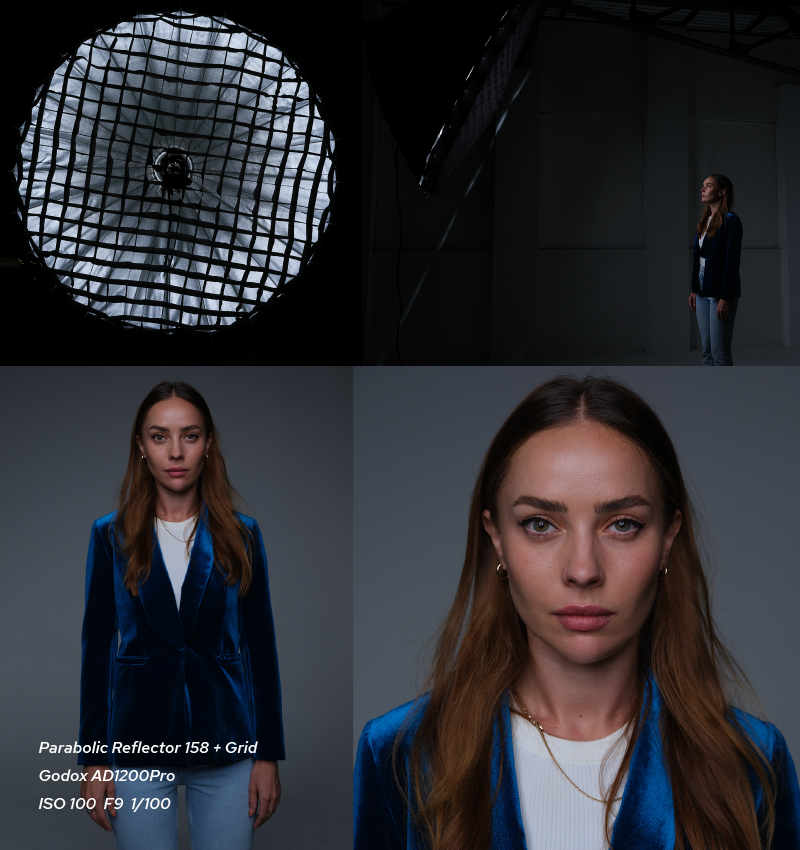
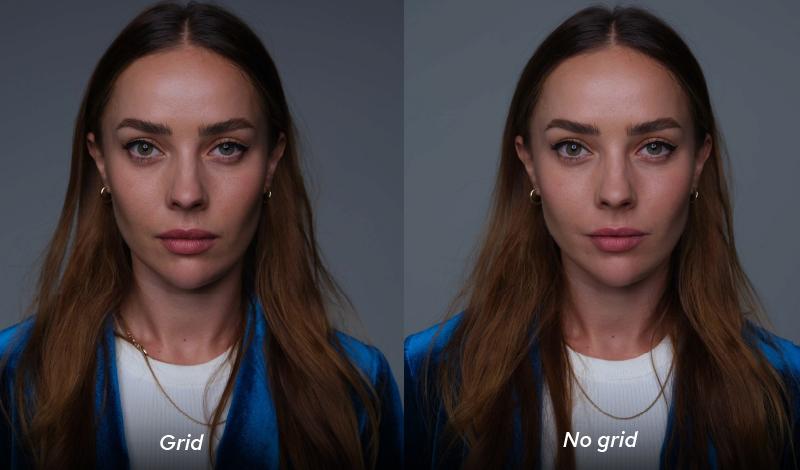
Crafting Mood and Aesthetics Through Light
After observing Tao’s lighting tests, we can start to understand how the P88 and P158 parabolic reflectors affect the light quality. The way these modifiers handle light can dramatically alter the mood, aesthetics, and depth of any portrait. The versatility of the Godox parabolic light focusing system reduces the need for extensive post-production, a valuable asset for both commercial photographers with high daily image volumes and those seeking a natural, minimally retouched look. A comprehensive understanding of their effect on studio portraits empowers photographers to master light manipulation, ultimately shaping the mood and aesthetics of their images.